Lisa Torell
works
biography
other works
contact
________________________________________________________________________________________________________
Distributed Liability – Future Signs for Environmental Justice
(2026)
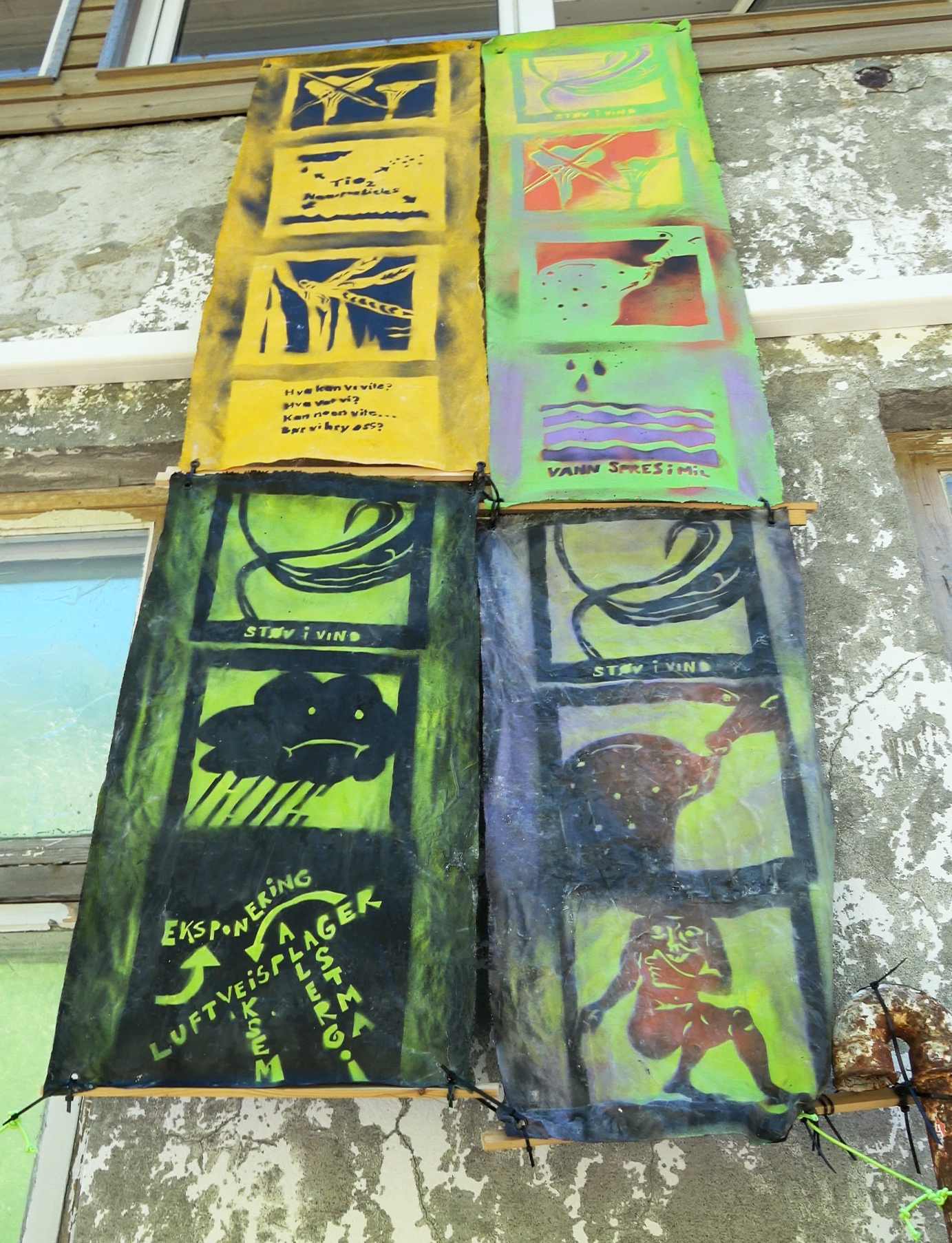
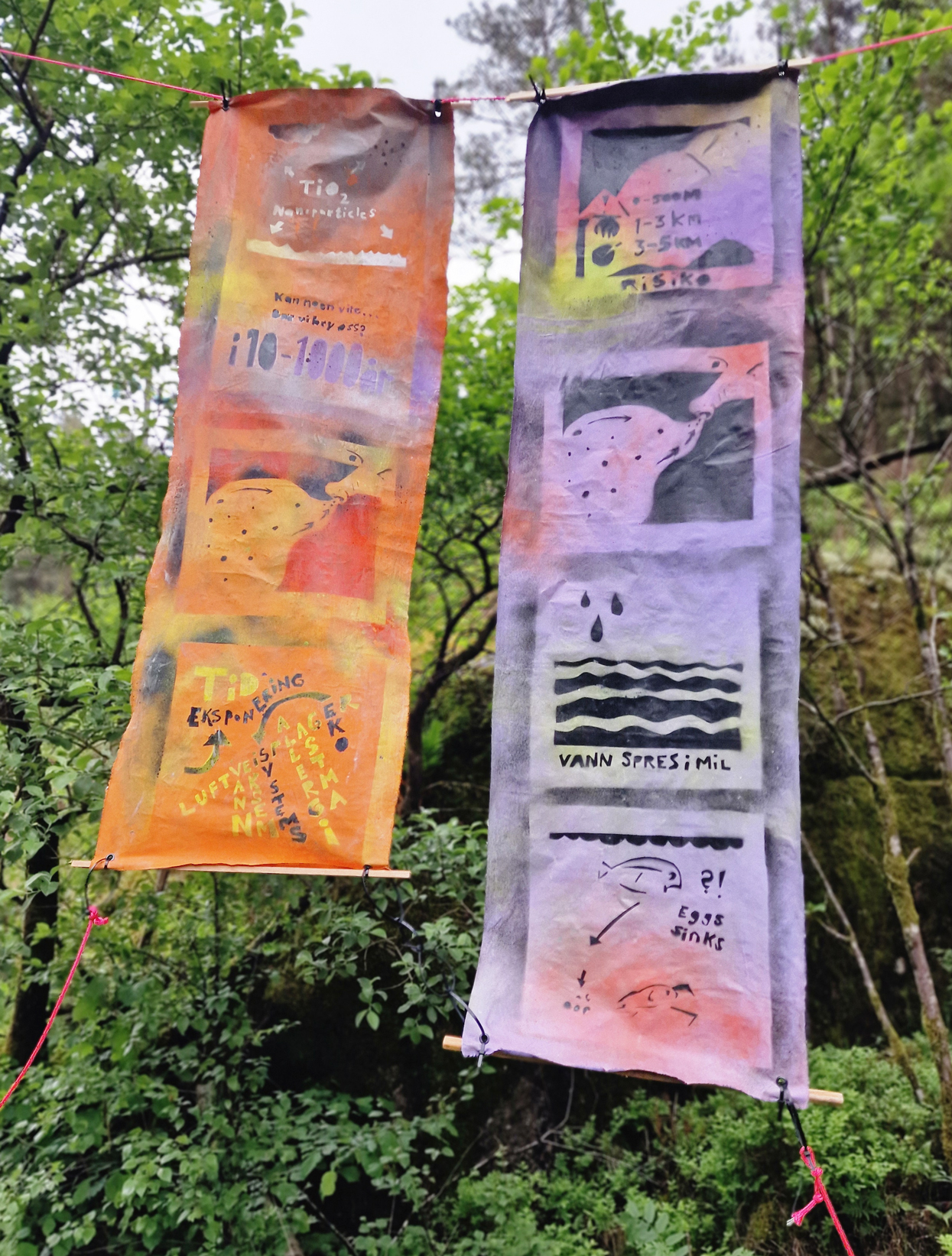
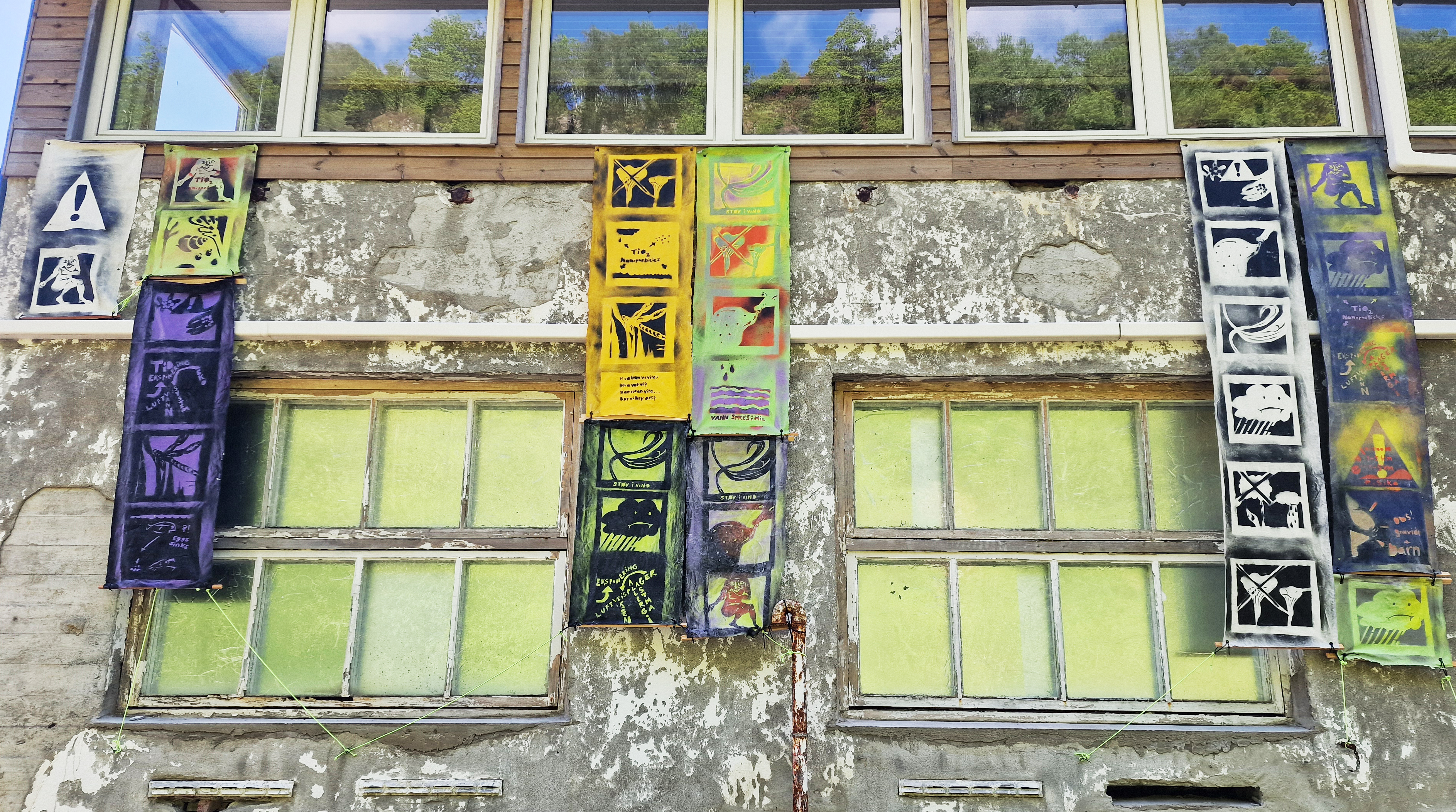
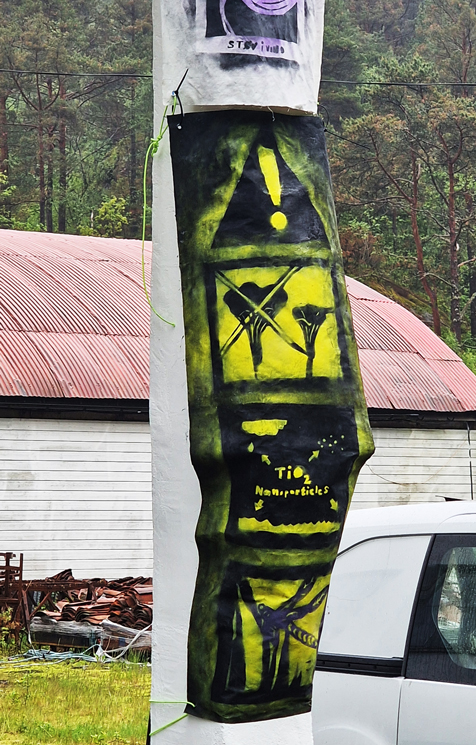
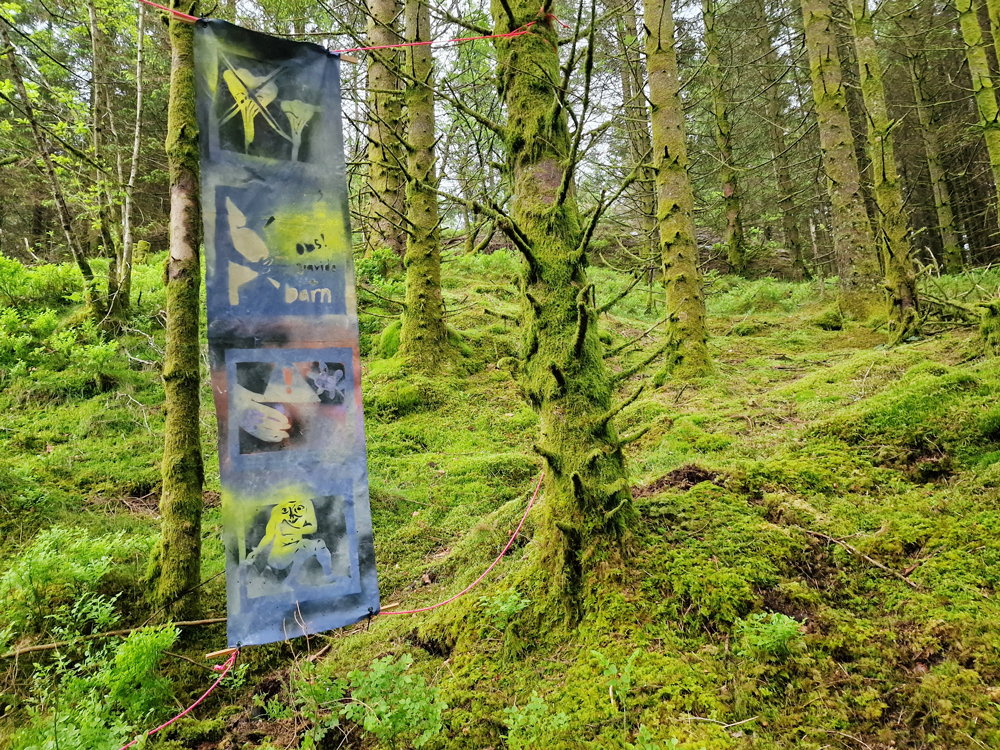
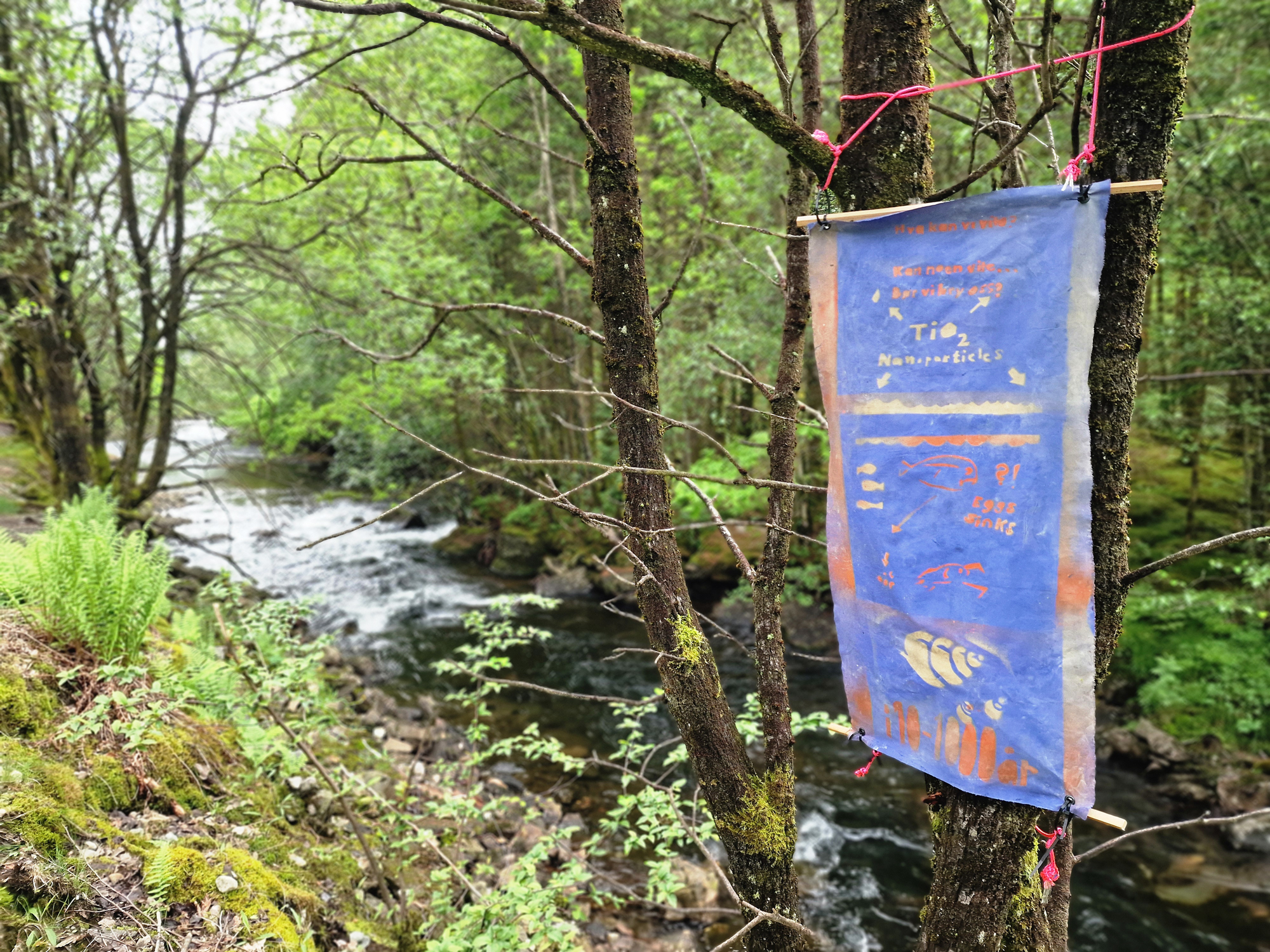
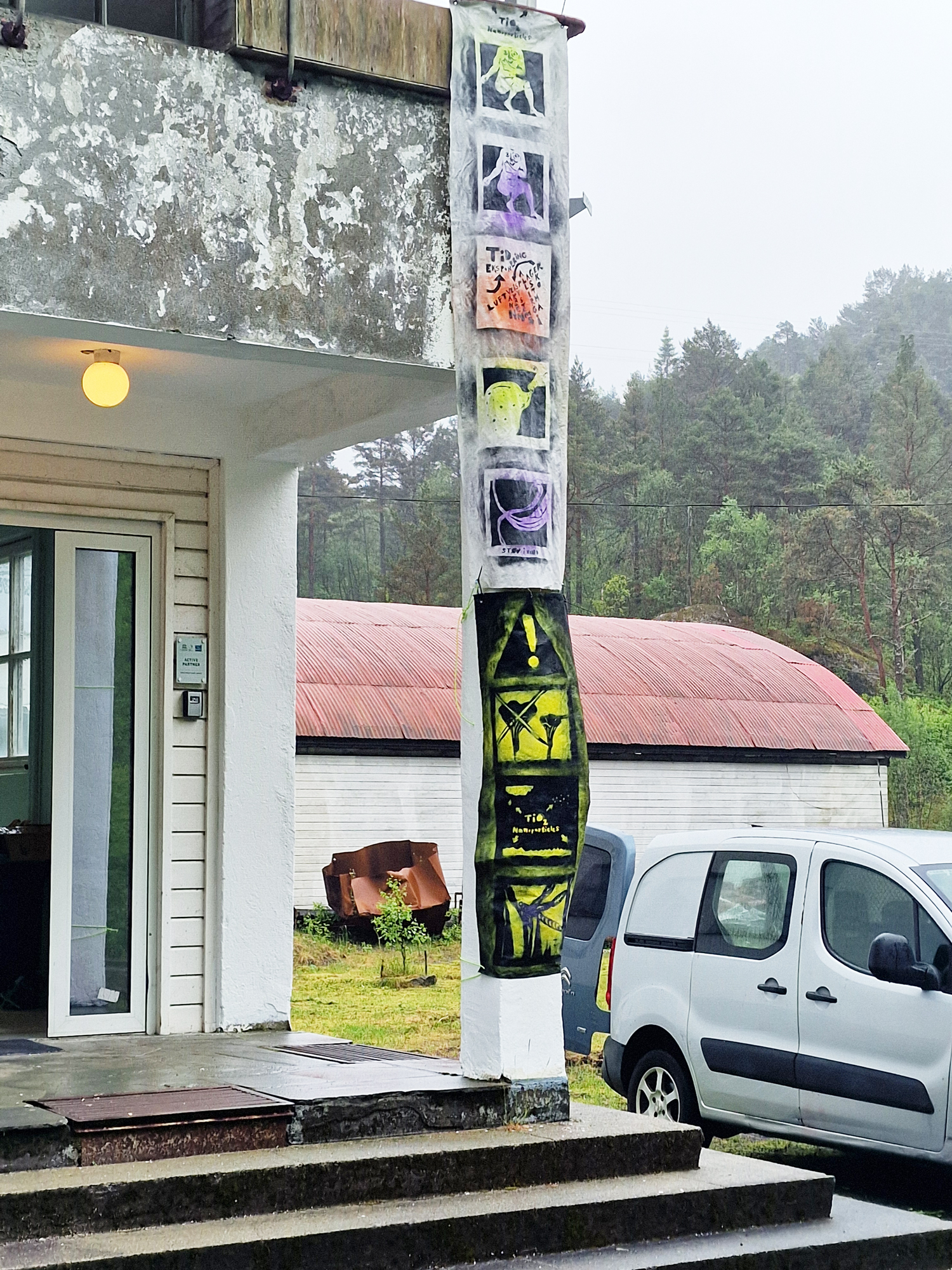
A warning sign reading ‘Do not anchor here – power cable on the seabed’ is a form of duty to provide information. ‘Do not eat mushrooms or berries – the ground has been affected by mining activities.’ ‘Airborne mining dust – be aware of wind directions’, ‘Asthmatics, pregnant women, children and the elderly are particularly sensitive to airborne particles’ or ‘Low oxygen levels threaten fish reproduction in this area’ could be others.
Information transfer is particularly necessary in nature because it is so charismatic.
I have been thinking about the question: How can information be shared? Dissemination through dust and water. How can we bridge the gap between policy documents, research, industry and people? We know that certain forms of resource extraction will continue. The question is therefore not just whether we should extract, but how we can take responsibility for the consequences – and how this responsibility can be made visible. Information relating to both human health and affected seabeds and altered ecosystems. How can information travel from research reports and environmental impact assessments into people’s everyday lives and become part of their walks in the woods, jogs and swims?
Banners. Waxed, painted and spray-painted cotton. Various lengths (0,4 - 4 m). Water-based paint. Stencil cut-outs.
Locations:
On the façade of Velferden, in the exhibition spaces, and along the forest trails
The work was produced for Waste | Deposit by Velferden Sokndals Scene for Samtidskunst, a interdisciplinary and dialogue-based programme which started in 2023 and that in 2026 ended with a seminar, exhibition (5/6-30/8 2026) and publication.
>Velferden
>Velferden Zine
(Founders of Velferden –the artists_ VelMaiken Stene and Hans Edward Hammonds)
Artists: Anna Carin Hedberg, Ebba Moi, Hanna Sjöstrand, Linda Lamignan, Lisa Torell, Pierre Lionel Matte, Simon Daniel Tegnander Wenzel, Siri Austeen, Tove Kommedal
VELFERDEN ABOUT THE THEME WASTE | DEPOSITE:
Waste is the worthless leftovers after valuable minerals have been separated from the rock in the mountain. This material—also referred to as tailings—is classified as waste and is stored in large deposits on land and in the sea. Tailing deposits or landfills are currently a necessary consequence of mining. In Sokndal, which is Norway's largest mining municipality, the landfills amounts to millions of tons of waste- an unresolved potential resting on the seabed and within the landscape. We live in a modern consumer society, and all the products we use contain minerals. Every form of mineral extraction produces large amounts of waste and pollution. If the disposal of tailings in nature is a problem, how can we begin to change the way we do things?
At Velferden, we take a closer look at these issues and ask: How can we better manage the enormous amounts of waste we as a society generate? Are there other ways of managing resources that protect nature and make us more responsible consumers? How do these rapid interventions affect our relationship with nature as it is?
During the last 3 years, Velferden has run the interdisciplinary programme WASTE / DEPOSIT. Through art, workshops and dialogue, we have explored issues related to resource extraction, waste and the environment, based on mining and landscape changes in Sokndal.
The dialogue about WASTE / DEPOSIT is complex. We make money from mining, while at the same time undermining the nature we live in. Established mines are allowed to continue their activities, while new mines are met with skepticism and protest. In the seminar we ask how we can better manage the enormous amounts of waste we generate. Are there other ways to manage resources that simultaneously protect nature and make us more responsible consumers? How do the rapid interventions affect our relationship with nature, and what do the interventions do to us?
We are pleased to present contributions from artists, researchers, mining company executives, environmentalists and economists for the seminar. It will be a day full of nuanced dialogue between people who are usually on different sides of the table, but who all have their own professional and personal relationship to the topic.
The seminar is divided into two parts. First we present problems, and after lunch we explore potential solutions. The program consists of professional presentations followed by participant-based workshops where we divide into groups and discuss problems and solutions together.
> Seminar
The seminar is conducted in English to include our international guests and make the dialogue relevant to our network.
People involved 2023-2026:
Artists and researchers who participated in the inspections:
Anne Sverdrup-Thygeson, Tove Kommedal, Brynjar Åbel Bandlien, Bjørn-Tore Blindheim, Siri Austeen, Pierre Lionel Matte, Linda Lamingnan, Merete Hermansen Jonvik, Carl-Oscar Sjögren, Lisa Torell, Marie Storli, Simon Daniel Tegnander Wenzel, Ingrid Halland, Ebba Moi, Anna Carin Hedberg, Adrian Bugge, Hanna Sjöstrand, Runa Norheim and Thomas Østbye.
Local experts who have contributed knowledge:
Rune Haaland
Erling Svensen
Jarl Birkeland
Paul Thjømøe
Paul Magnus Lundø
Kari Berge
Thanks to the artists who helped explore the materiality of sand at the Sand School:
Agnes Mohlin (Artist) (SV)
Naomi Fisher (Artist) (United States)
Stefan Schröder (Artist) (N)
Siri Austeen (Artist) (N)
Thanks to business representatives who have given us access to and shared their perspectives:
Knut Petter Netland - Titania As
Egil Solheim - Noah As
Solveig Ræg Olsen - Rekefjord Stone As
Erik Joa - Norway Minerals As
Michael Wurmser - Norway Minerals As
Øyvind Standeren Pedersen - Norway Minerals As
Stian Rossi - Cemonite As